
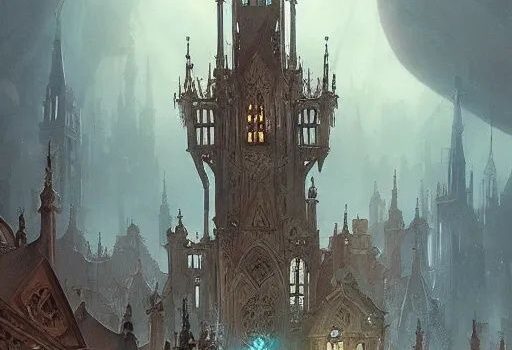
Beyond the Background: How Fantasy City Architecture Dictates Social Power
-
Posted in : Movie genres:
- On : Sep 10, 2026
Why Fantasy Geography Tells the Real Political Story
Fantasy cities are often introduced through the postcard view: walls catching the sunset, towers piercing the cloudline, bridges spanning impossible ravines, and markets crowded with colour. That spectacle has its place, but it is rarely the most important information a city can provide. The sharper question is not whether a settlement looks memorable. It is who benefits from the way it is built, who pays to maintain it, and who is forced to live with the consequences.
For worldbuilders, this is where architecture stops being decorative wallpaper and becomes political evidence. A city”s height, drainage, gates, roads, warehouses, and public squares reveal how power moves through it. Wealth tends to cluster near security, clean water, sunlight, transport, and administrative protection. Labour is pushed towards noise, smoke, waste, flood risk, and longer journeys. If you are designing a fantasy metropolis, the location of a palace matters less than the systems that allow the palace to eat, remain warm, stay informed, and keep unrest away from its doors. The same principle applies when reading speculative fiction: the built environment often tells the truth before the ruling class does.
This approach also makes imaginary cities feel more convincing because it connects grand politics to ordinary friction. A noble decree may sound abstract, but a checkpoint that delays workers, a bridge closed after dusk, or a sewer that backs into a poor district has immediate narrative force. In the most effective settings, architecture enforces class without needing constant exposition. Its rules are embedded in stone and habit. That is why works such as China Miéville”s analysis of speculative borders are so useful: they show that geography is not simply where people happen to stand, but a system of permissions governing who may see, move, trade, and belong.
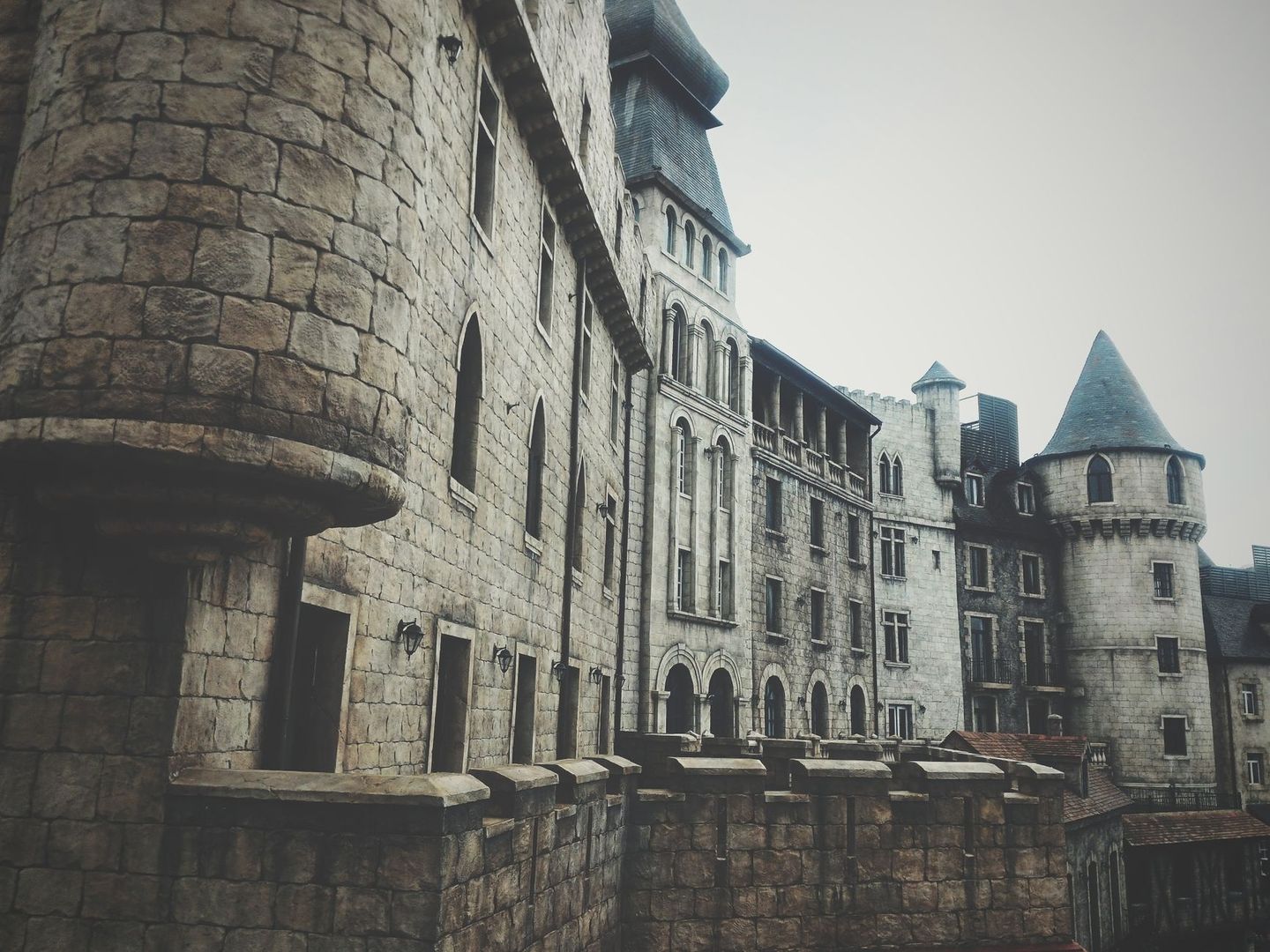
Vertical Stratification and the Architecture of Elevation
Elevation is one of the cleanest ways to turn social hierarchy into physical experience. When a city is built in tiers, every stairway, lift, switchback road, and retaining wall becomes part of its political machinery. Those above gain defensibility, cleaner air, better views, and greater warning of approaching danger. Those below carry supplies uphill, endure runoff and shadow, and become easier to monitor from elevated positions. Gravity does much of the policing for free.
Minas Tirith offers a useful comparative model. Its ascending circles are not merely a dramatic defensive arrangement. The climb separates communities by status and access, while the city”s geometry allows the upper levels to remain protected even when the lower ones are threatened. A modern steampunk equivalent might replace stone terraces with stacked industrial spires. Aristocrats occupy sunlit platforms above the smog, with private lifts, filtered air, and direct access to sky-docks. Mechanics, porters, and factory workers remain beneath the exhaust plumes, where vertical movement costs time, money, and physical effort.
| Urban level | Typical privileges | Defensive advantage | Social cost |
|---|---|---|---|
| High citadel or spire crown | Clean air, sunlight, secure communications, political access | Strong visibility and difficult direct assault | Dependence on controlled supply routes |
| Administrative and mercantile tiers | Markets, offices, guarded storage, better transport | Protected by inner gates and elevated roads | Constant surveillance and restricted movement |
| Industrial middle levels | Employment, workshops, partial civic services | Can be sealed off from both upper and lower districts | Pollution, injury, unstable employment |
| Low wards and foundations | Cheap housing, informal markets, access to waste streams | Often sacrificed first during siege or flood | Overcrowding, disease, flooding, limited political voice |
The crucial detail is logistics. Elevated privilege cannot survive on symbolism alone. Food, fuel, water, messages, and labour must reach the upper districts. That creates opportunities for both control and resistance. A regime can place guards at lifts and stairheads, tax every cart climbing the road, or issue passes that determine who may enter a higher tier. Conversely, workers who control the hoists, aqueducts, or freight ramps possess leverage that the official map may conceal.
Architecture also shapes political imagination. Residents of the upper city may regard the lower wards as distant and disorderly because the route between them is physically exhausting and institutionally restricted. People below may see the citadel every day without ever approaching it. That constant visual presence turns elevation into a reminder of exclusion. As Genevieve Goffman”s discussion of architecture, fantasy, decadence, and collapse suggests, buildings can embody power and ego as much as they provide shelter. A spire is never just tall. It tells observers what the society considers worthy of elevation.
Choke Points and the Art of Population Containment
Walls and gates are conventionally explained as protection against invading armies, but internal barriers are often more revealing. Narrow bridges, retractable walkways, barricaded streets, gatehouses, toll arches, and guarded stairs determine how a population can assemble. A city authority does not need to outlaw solidarity if it makes solidarity physically difficult. If workers from three districts must pass through separate checkpoints, use different bridges, or arrive at different market hours, collective action becomes slower and easier to identify.
Miéville”s New Crobuzon provides a harsher version of this principle. In Perdido Street Station, the city is a dense, unequal environment where technology, magic, species difference, criminal power, and state punishment overlap. Its geography feels politically active because movement through it carries risk. The city is not a neutral container for Isaac, Lin, and Yagharek. It is a network of districts, authorities, informal bosses, and dangerous infrastructures that determines which relationships can develop and which must remain hidden. The same friction operates differently in Besźel and Ul Qoma, where two cities occupy the same physical space but remain separate through law, custom, and the learned practice of “unseeing”. The border is maintained in people”s behaviour as much as in the street plan, a point explored in scholarship on The City & the City.
For fantasy regimes, the most effective containment mechanisms are usually mundane enough to appear administrative:
- Permit bridges that restrict movement between neighbourhoods and create a searchable record of dissenters.
- Market zoning that prevents rival guilds or ethnic communities from sharing commercial space.
- Timed gates that force shift workers to travel under supervision and make night-time meetings suspicious.
- One-way roads and controlled lifts that separate deliveries from residents and turn congestion into a political tool.
- Religious or civic boundaries that classify some bodies as legitimate occupants and others as permanent visitors.
These devices become especially powerful when people internalise them. Besźel and Ul Qoma demonstrate that a border can operate through trained perception, with citizens taught not only where they are but what they must refuse to acknowledge. That is a useful lesson for designers: a city can divide its population through architecture, etiquette, language, uniforms, sound, or ritual. The strongest systems combine all of these, making resistance difficult because the boundary feels natural even though it is maintained by constant enforcement.
Sewers, Refuse, and the Reality of Waste Extraction
Sanitation is one of the most honest tests of worldbuilding. A palace can be imagined in seconds, but a functioning city must answer what happens to excrement, slaughterhouse runoff, ash, broken tools, spoiled grain, industrial chemicals, magical residue, and the bodies of the dead. If a metropolis has found a way to produce enormous wealth without producing visible waste, that absence needs an explanation. Perhaps servants remove it at night. Perhaps alchemists convert it into fuel. Perhaps it is dumped in a district whose residents have no political power to object.
The route of waste reveals the route of authority. Downstream districts often become sacrifice zones because water, wind, and gravity carry municipal costs away from wealthy centres. In a magical city, the same logic applies to thaumaturgical sludge or failed enchantments. A spellworks quarter may create glowing contamination that flows through drains into a marsh occupied by marginalised communities. Industrial byproduct may be transformed into cheap construction material, creating a salvage economy that is dangerous but essential. The key question is never simply whether the city has advanced technology. It is who handles the consequences of that technology and whether their labour is recognised, regulated, or discarded.
Miéville”s New Crobuzon is valuable precisely because its grime is structural rather than atmospheric. The city”s strange species, punitive transformations, factories, criminal networks, and laboratories create a sense that every marvel has a material cost. In The Scar, Armada offers a contrasting model. The floating city is assembled from hundreds of ships, and its survival depends on maintenance, navigation, capture, repair, and the management of limited resources. Its public works, including the attempt to capture an avanc and use it to tow the city, show how civic ambition can reorganise an entire society. Armada”s alternative power network is not free from coercion, forced assimilation, or political manipulation, but it demonstrates that resource reclamation can produce institutions outside the authority of a conventional land empire.
Floating and marginal settlements are especially useful for worldbuilders because they make infrastructure visible. A land city can hide its foundations beneath streets, while Armada must constantly confront buoyancy, weather, food storage, hull damage, and the allocation of usable space. Every resident can see that survival depends on collective maintenance, even when leadership monopolises the benefits. This is also where questions of embodiment and exclusion become important. Speculative fiction can expose how cities are designed around supposedly standard bodies, then classify disabled, altered, racialised, or otherwise Othered people as problems. A serious metropolis should therefore show whose mobility is accommodated, whose labour is exploited, and whose bodies are treated as disposable.
Four Structural Signs of a Deeply Realized Speculative Metropolis
A functional fantasy city does not need to explain every drainpipe or warehouse in the text. It does need enough visible evidence that readers can infer the machinery beneath the story. The following checklist helps distinguish a society that operates from a film set that merely poses behind the characters.
- Supply arteries are traceable. Identify where food, water, fuel, raw materials, magical components, and information enter the city. Follow them from farms, mines, forests, rivers, or conquered territories into warehouses and markets. If the capital consumes rare luxuries, determine who transports them and what risks make that trade profitable.
- Maintenance labour is visible. Streets, lifts, aqueducts, bridges, wards, and defensive walls require workers. Show cleaners, engineers, rat-catchers, ferrymen, scribes, guards, and repair crews. Their schedules and wages may matter more to the city”s stability than the speeches of its rulers.
- Access is uneven by design. Ask who can enter government districts, use public transport, draw clean water, practise magic, or claim legal protection. A city becomes politically legible when privilege is expressed through everyday permissions rather than only through crowns and uniforms.
- Waste and failure have destinations. Decide where broken machines, failed spells, refuse, disease, and displaced people go. A system that never breaks will feel artificial. A system that breaks in predictable places will feel lived in, and those places will usually produce conflict, black markets, reform movements, or revolt.
These signs also provide strong prompts for tabletop designers. A district can become more than a combat map when its bridges determine faction access, its waste channels create hazards, and its maintenance crews hold the keys to a vital gate. Give players reasons to care about infrastructure. A damaged lift can strand a district, a blocked canal can raise food prices, and a missing sanitation team can turn a minor curse into a public emergency. The city then becomes an active game system rather than a sequence of attractive locations.
Build Worlds Grounded in Human Reality
Fantasy settings achieve lasting resonance when their stones reflect the tangible friction of human organisation. A wall expresses fear and defence, but it may also express taxation, exclusion, and the authority to decide who belongs inside. A bridge connects districts, but it can also concentrate surveillance. A sewer protects public health for some residents while carrying danger into the homes of others. These contradictions are not flaws to smooth away. They are the material from which believable political drama is built.
For creators, the practical move is straightforward: design the city”s economic machinery before polishing its skyline. Map supply routes, identify maintenance workers, mark choke points, decide which neighbourhoods receive investment, and follow every magical or industrial process to its waste product. For readers and players, look past the famous tower and ask who climbs it, who cleans it, and who is kept below. When municipal design is treated as an active character, worldbuilding moves beyond decorative trivia. The city begins to make demands, impose costs, create alliances, and generate stories of its own. That is when the background stops being background.